Live room versus iso booths
Mormonyra has 3 rooms: a live room of about 42 square metres, 2 iso booths and a mix/master area. On live ensemble recording drums, bass, keys and guitars share the big room; amps can sit behind gobos or in an iso booth so levels stay controlled.
That differs from vocal recording in the booth, where isolation comes first. Live sessions balance energy and separation. Too much iso feels flat; too much bleed makes mixing hard. We tune the setup to the genre and the players in the room that day.
Drums: overheads and close mics
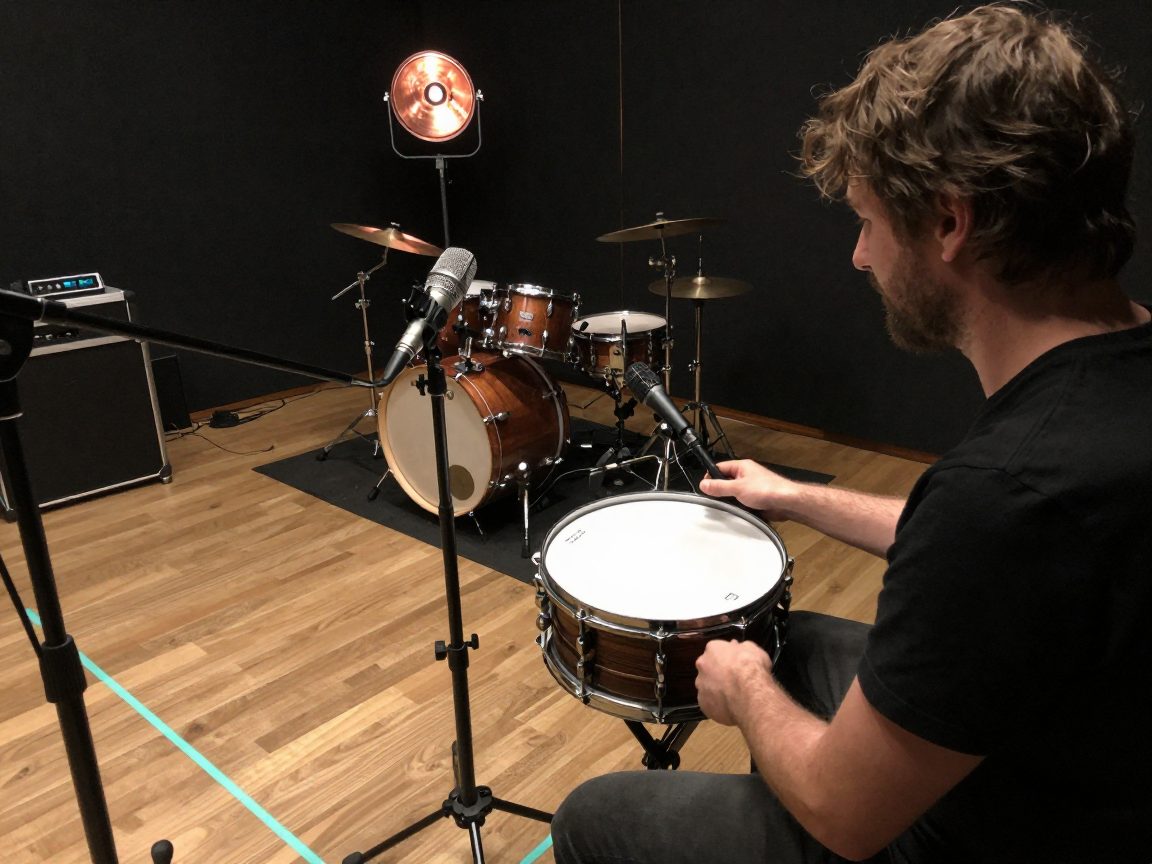
Drums usually get a stereo overhead pair plus close mics on kick, snare and toms. Overheads show the kit; close mics capture attack and low end. In a compact room we ride overheads slightly higher than in a huge hall to limit floor reflections.
Snare often uses a dynamic mic on top and sometimes a second underneath for body. Hi-hat gets a small-diaphragm condenser aimed to keep snare spill down. When the drummer uses brushes we pick more sensitive capsules and adjust gain rather than fixing it digitally later.
Guitars, bass and amps
Electric guitar is commonly tracked with a dynamic or ribbon on the speaker, sometimes a second mic at distance for air. The iso room behind the live room suits cranked amps without flooding the kit. Bass via DI plus an optional cab mic gives the mixer options.
Acoustic guitar in the ensemble needs placement away from the kit and a cardioid pattern. Keys often come from DI or stereo outs; if an acoustic piano or Rhodes bleeds into the room we add room mics as colour, not as the main source.
When we swap mics
We stock roughly 26 microphones and 32 lines on the desk. Still, we swap during soundcheck: another snare mic if the drummer uses metal beaters, or a ribbon on a clean guitar that sounds harsh with a dynamic.
Those tests take ten to twenty minutes and are part of live ensemble recording — they count in your booked time. Hourly rate is €125; a full day is €920 with engineer included. Plan soundcheck inside your session budget if vocals happen the same day.
Bleed, headphones and monitoring
Bleed is not always bad: it glues a live take. Too much hi-hat in the guitar mic is. We run amps slightly quieter than in rehearsal and use per-player headphone mixes where needed. Drummers often get a separate submix so click and bass stay clear without loud bleed back into the room.
If someone must play without headphones we choose patterns and positions more conservatively. Mention unusual monitoring needs when you contact us before the session.
Overdubs and flexibility
After the live take there is room for overdubs: extra guitars, percussion or a lead in the booth. That beats tracking everything separately, but only when the foundation is solid. Listen to the rough balance on the spot; fixing big issues now is cheaper than repairing stems.
For mixing you later deliver tracks per export stems for mix. Live mic choices decide how clean those stems are. Unsure how many songs fit per day? See services and our FAQ on session length.
Preparation in Amsterdam
Fresh strings, tuned drums, synth patch backups: small items save minutes per take. Tram 3 stops at Marnixstraat; from there it is about a 4-minute walk west along Haarlemmerweg to number 178. From Amsterdam Centraal it is roughly a 10-minute walk via Haarlemmerdijk and Haarlemmerweg. — arrive with time for soundcheck. Monday–Friday 09:30–18:30, Saturday by appointment. Closed on Sunday. are standard hours; Saturday by appointment.
Bringing odd pedals or instruments? Tell us at booking so we prep the right DI and power. Cancellation follows the same rules as elsewhere: 7 days free, then see terms.
Summary
- Live room for energy, iso booth for loud amps.
- Drums: overheads plus close mics; check snare and hi-hat separately.
- Test mics in soundcheck — that is part of the session.
- Allow time for overdubs and a realistic budget.
- Book live ensemble recording via contact or 020 808 4193.
We archive recordings for 24 months. Questions about session file privacy are in the privacy policy.